tea.glass · sampling channel Stock tea for your shop · Encyclopedia · School · Atlas · Pu-erh EN · RU · · · FR · ES · AR
tea.glass

home · catalog

Glassware — tasting cups

Small glass cups for reading liquor honestly

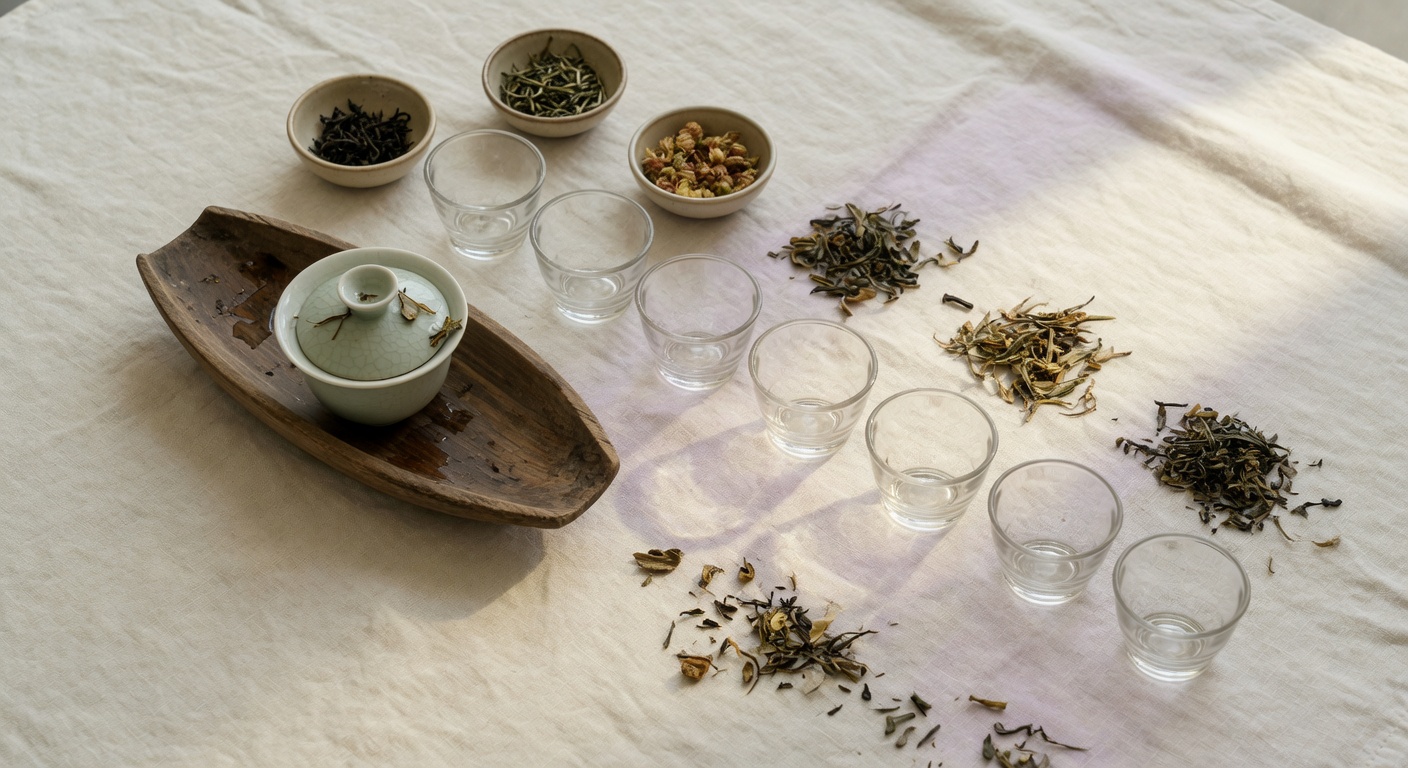
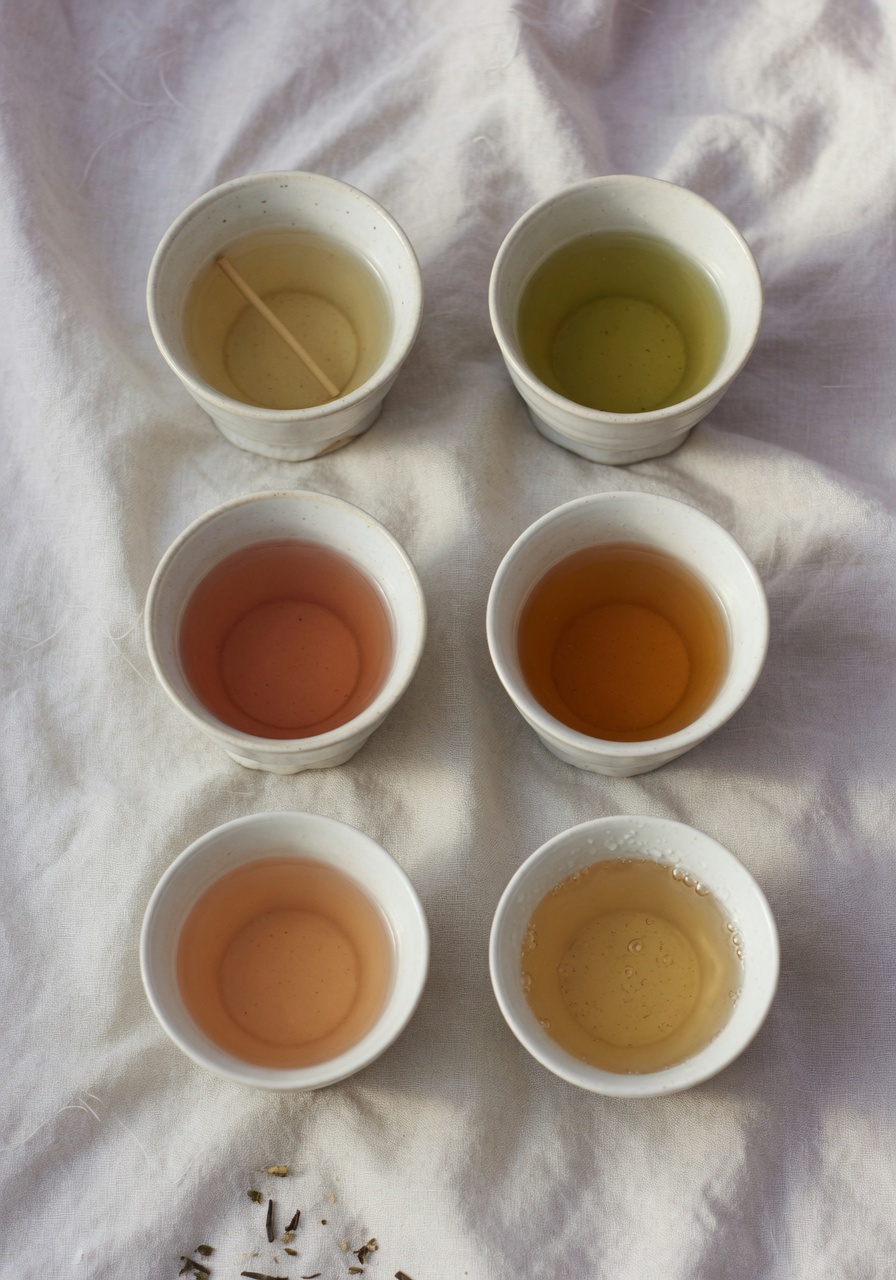
Tasting cups — *pǐn míng bēi* (品茗杯) — are the smallest piece of a gongfu setup, and the most revealing. At 25–50ml, a clear glass cup shows the true colour of each steep: the gold of a *yín zhēn*, the apricot edge of a *mí lán xiāng*, the rust of an aged *shú pǔ*. No clay, no glaze, no flattery.

Why glass at the cup, not just at the brewer

Most beginners focus on the brewing vessel — gaiwan or pot — and pour into whatever cup is at hand. Experienced drinkers reverse the logic. The cup is where you finally meet the tea: nose to rim, eye to liquor. A glass pǐn míng bēi removes every variable except the tea itself.

The form has Chaozhou roots. Traditional gongfu cha in Guangdong uses thimble-sized cups — often around 25ml — so a single gaiwan can pour three or four guests in one round, and so each sip is finished while still warm. When Hario and a handful of Taiwanese glass studios started producing heat-resistant borosilicate versions in the 1990s, the visual side of the practice opened up. Suddenly you could read a dāncōng steep against a white wall and see the exact moment the liquor turned from green-gold to amber.

Good tasting cups share four traits. First, thin walls — around 1.5mm — so the cup warms in the hand without insulating the tea away from your lip. Second, an outward-flaring rim that directs liquor onto the front of the tongue, where sweetness lives. Third, perfectly clear borosilicate (no lead crystal, no recycled green tint) so colour reads true. Fourth, a base small enough to fit on a chá chuán tea boat without crowding.

Seasonality matters less here than for tea itself, but production does cluster: most small studios fire batches in autumn and winter when the workshops are cooler. A hand-blown cup will show faint pontil marks on the base and tiny variations in wall thickness — these are not defects, they are the signature of breath and timing.

Pair tasting cups with a glass gaiwan or a clear fairness pitcher and you have a full visual gongfu set. The encyclopedia entry on gongfu service at thetea.app/gongfu walks through the choreography; our own guide to visual teas lists which teas reward this kind of looking most.

This season’s tasting cups

A small, curated set — we add new makers when the firing schedule allows, not when the calendar says. Each cup is checked by hand for rim symmetry and clarity.
A buyer's note

Choosing tasting cups that earn their place

Match volume to your brewer

A 110ml gaiwan pours cleanly into three 30ml cups with a little fairness-pitcher headroom. Cups larger than 50ml break the gongfu rhythm — the tea cools before the second sip.

Check the rim against light

Hold the cup at eye level and rotate. A well-finished rim is a single smooth curve with no thick spots. Thick rims feel clumsy on the lip and dull the first impression of the liquor.

Borosilicate, not soda-lime

Only borosilicate handles the thermal shock of 95°C tea poured into a room-temperature cup. Cheaper soda-lime glass will craze and eventually crack at the base seam.

Buy in even numbers, plus one

Six or eight cups, plus a spare. Tasting cups break — not often, but inevitably — and matched sets are hard to complete later. The spare also lets you serve an extra guest without breaking symmetry.

Wash by hand, dry rim-down

No detergent, no dishwasher. Rinse with hot water, wipe with a lint-free cloth, store rim-down on a bamboo rack so the inside stays dust-free between sessions.

Pair clear with clear

If your gaiwan is glass, keep the cups glass too. Mixing porcelain cups with a glass gaiwan splits the visual logic — the whole point is to read colour from brew to sip.

Common questions

Asked, answered.

How many tasting cups do I actually need?

For solo drinking, two — one to sip from, one to compare steeps side by side. For guests, six is the standard gongfu number. Eight if you host often.

Can I use these cups for coffee or spirits?

Physically yes, but coffee oils stain the inside and dull future tea sessions. Keep tasting cups for tea only — a separate small glass set for whisky or espresso is cheap insurance.

Why are tasting cups so small?

Gongfu brewing produces concentrated, short infusions. A 30ml pour is finished in two or three sips while still hot, which is when aromatics are most readable. Larger cups cool before you finish them.

Do glass cups change the taste compared to porcelain?

Glass is the most neutral surface available — it adds nothing. Porcelain is also neutral but slightly insulating; clay cups actively shape the tea. For tasting and learning, glass is the honest choice.

Will hot tea crack a glass cup?

Not if the cup is borosilicate and at room temperature. Avoid pouring boiling tea into a cup straight from the fridge or a cold windowsill — let it acclimatise first.

Which teas show best in glass cups?

Yellow tea, silver needle white, light *dāncōng* oolong, and aged *shēng pǔ* all reveal subtle colour shifts. Our visual teas guide lists them in detail, and you can sample several through [tea.gratis](https://tea.gratis).

Where can I learn the full gongfu service that uses these cups?

The intermediate course at [tea.school](https://tea.school) covers cup placement, pouring order, and the etiquette of presenting liquor to guests. The encyclopedia at [thetea.app](https://thetea.app) has shorter reference entries.